Safety Shower
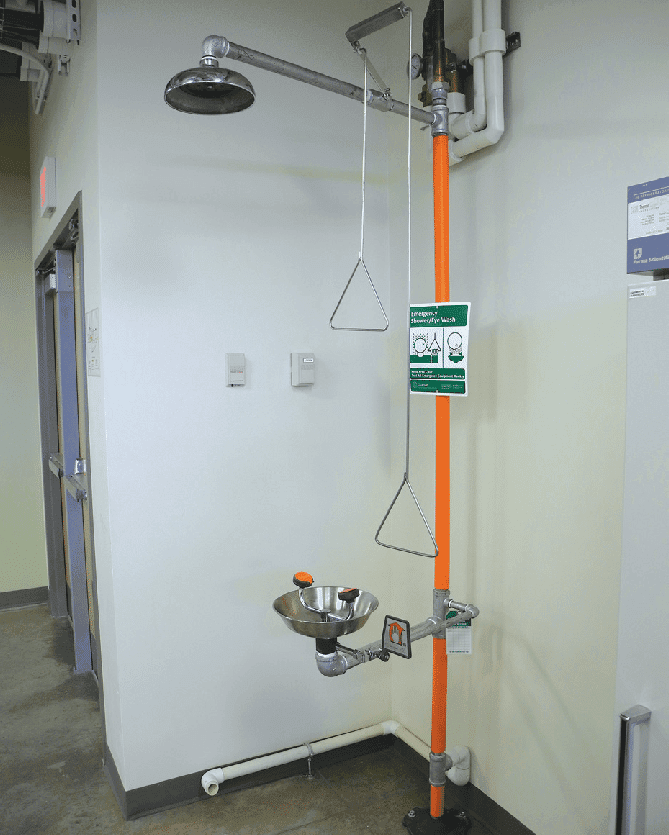
Emergency safety showers and eyewash stations — combination units, standalone showers, eye/face washes and portable eyewash for chemical exposure.
- Unit types
- Combination shower/eyewash, standalone shower, eye/face wash, portable eyewash
- Materials
- Galvanised steel, stainless steel (SS 304/316), ABS components
- Activation
- Pull rod or handle for shower; push flag, paddle or foot pedal for eyewash
- Reference standard
- ANSI/ISEA Z358.1 (flow, duration and placement guidance)
- Options
- Freeze-protected, heated or tepid water, high-visibility finish and signage
About Safety Shower
Emergency safety showers and eyewash stations give immediate first aid when a worker is splashed with a hazardous chemical. The first seconds after exposure matter most, so the equipment has to be close at hand, easy to activate and able to deliver a steady, tepid flow long enough to flush the contaminant away.
Common configurations include combination units with a drench shower and eye/face wash on one stand, standalone plumbed showers, wall- or pedestal-mounted eyewash fountains, and self-contained portable eyewash units for locations without plumbing. Construction is typically galvanised steel or stainless steel, with ABS bowls or stainless bowls for corrosive environments, and freeze-protected or heated versions for cold or exposed sites. Many specifications reference ANSI/ISEA Z358.1. Among its provisions are a minimum 15-minute flushing period, shower flow of at least about 76 litres per minute, eyewash flow of at least about 1.5 litres per minute, and placement within roughly 10 seconds' unobstructed travel of the hazard.
Locate and size emergency equipment based on the chemicals and exposure points in your site's risk assessment, and test units regularly. Shlok Trading Co. can source showers, eyewashes and spares to your layout.
Safety Shower FAQs
How long should an emergency shower or eyewash run?
Under ANSI/ISEA Z358.1, emergency showers and eyewashes should deliver flushing fluid continuously for at least 15 minutes. Some chemicals may call for longer flushing based on medical advice.
Where should safety showers be placed?
They should sit on the same level as the hazard with an unobstructed path, reachable in about 10 seconds, according to ANSI/ISEA Z358.1 guidance. Strong corrosives may warrant placing them closer.
What if there is no plumbing at the location?
Self-contained portable eyewash stations or tank-fed showers can serve locations without a plumbed water supply, provided they meet the required flow and duration.
Need Safety Shower?
Share your grade, size and quantity requirements and our team will get back to you with availability and a quote.