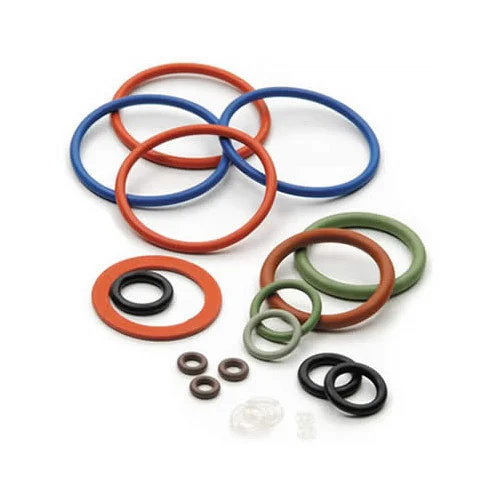
O-Rings
O-rings in NBR, FKM, EPDM, silicone, HNBR and PTFE — metric and inch sizes to ISO 3601 and AS568 for static and dynamic hydraulic and pneumatic seals.
- Materials
- NBR, FKM, EPDM, VMQ (silicone), HNBR, PTFE, FEP-encapsulated
- Hardness
- Commonly 70 and 90 Shore A
- Size standards
- ISO 3601 (metric), AS568 (inch)
- Cross-sections
- Commonly 1 mm to 10 mm
- Temperature range
- Approx. −60°C to +250°C depending on material
- Accessories
- Back-up rings, O-ring kits, cords for vulcanised joints
About O-Rings
An O-ring is a circular elastomer seal with a round cross-section, seated in a groove and squeezed between two surfaces to block fluid or gas. It is among the most widely used seals in engineering because it is compact, inexpensive and works in both static (flanges, covers) and dynamic (pistons, rods) applications.
Material compatibility is the first decision. NBR (nitrile) is the general choice for mineral oils, hydraulic fluids and fuels. FKM (fluorocarbon) handles higher temperatures and many chemicals and fuels. EPDM suits water, steam, glycols and brake fluids but not mineral oils. Silicone covers extreme temperatures in static service, HNBR adds toughness and heat resistance over NBR, and PTFE or FEP-encapsulated rings serve aggressive chemicals. Hardness is commonly 70 or 90 Shore A, with harder compounds or back-up rings used at higher pressures to prevent extrusion. Sizes are defined by inside diameter and cross-section and are standardised in ISO 3601 (metric) and AS568 (inch); getting groove dimensions and squeeze right is critical for seal life.
Shlok Trading Co. supplies O-rings in standard sizes, assortment kits and non-standard dimensions. Share the size, material, and fluid in service to get the correct ring.
O-Rings FAQs
How do I specify an O-ring?
Give the inside diameter, cross-section, material and hardness. If you only have the groove or a used ring, share those measurements and the fluid it seals.
Which O-ring material is best for hydraulic oil?
NBR is the usual choice for mineral hydraulic oils. FKM is preferred where temperatures are higher or for some synthetic fluids.
When do I need back-up rings?
Back-up rings are used at higher pressures or where clearance gaps are large, to stop the O-ring extruding into the gap.
Need O-Rings?
Share your grade, size and quantity requirements and our team will get back to you with availability and a quote.