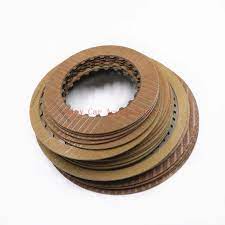
Friction Disk
Friction disks for industrial clutches and brakes — organic, sintered and semi-metallic linings in wet and dry types, supplied to sample or drawing.
- Lining materials
- Resin-bonded organic, sintered metallic, semi-metallic, ceramic, paper-based
- Operating type
- Dry or wet (oil-immersed)
- Typical friction coefficient
- Approx. 0.1 (wet) to 0.45 (dry), material dependent
- Construction
- Bonded or riveted lining on steel core; internal/external splines
- Sizing
- To drawing or sample (OD, ID, thickness, tooth profile)
About Friction Disk
Friction disks are the working element of clutches and brakes: discs or plates carrying a friction lining that engages a mating surface to transmit torque or bring a load to rest. In industrial plant they appear in mechanical presses, cranes and hoists, winches, gearboxes, machine tools and marine equipment, where reliable engagement and predictable wear are essential.
Linings fall into a few families. Resin-bonded organic materials engage smoothly and quietly and suit moderate duties. Sintered metallic (typically copper- or iron-based) linings tolerate high temperatures and heavy duty cycles. Semi-metallic and ceramic compounds sit in between. Disks are also classed as dry-running or wet (oil-immersed), and the lining must match: wet clutches use paper-based or sintered linings designed to work with the oil. Key selection factors are the required torque, energy per engagement, operating temperature, lining coefficient of friction and the disc dimensions — outer and inner diameter, thickness, and the spline or tooth profile.
Shlok Trading Co. sources replacement and new friction disks to drawing or from a worn sample. Send us the dimensions, equipment details and duty, and we will arrange a suitable lining.
Friction Disk FAQs
Can you supply a friction disk from an old sample?
Yes. Provide the worn disk or its key dimensions and equipment details, and a matching disk can be sourced.
What is the difference between wet and dry friction disks?
Dry disks run in air and generally have higher friction. Wet disks run in oil, which cools them and smooths engagement, and they need a lining compatible with that oil.
Why do friction disks glaze?
Glazing usually comes from overheating or prolonged slipping, which hardens the lining surface and lowers friction. Correct adjustment and a lining matched to the duty help prevent it.
Need Friction Disk?
Share your grade, size and quantity requirements and our team will get back to you with availability and a quote.